How PHY Works
How PHY Works
Read what your body
has been recording.
PHY turns a 60-second 3D posture scan into a clear signal of how your body is built, how it’s adapting, and what to train next. Built on 40,000+ proprietary 3D posture scans and 100,000+ landmarking images.
Get Your First Scan FreeHow PHY Works:
No sensors to charge. No appointment to book. Just your phone and 60 seconds. Most posture apps measure a photo. PHY reconstructs a body.
-
1. Scan
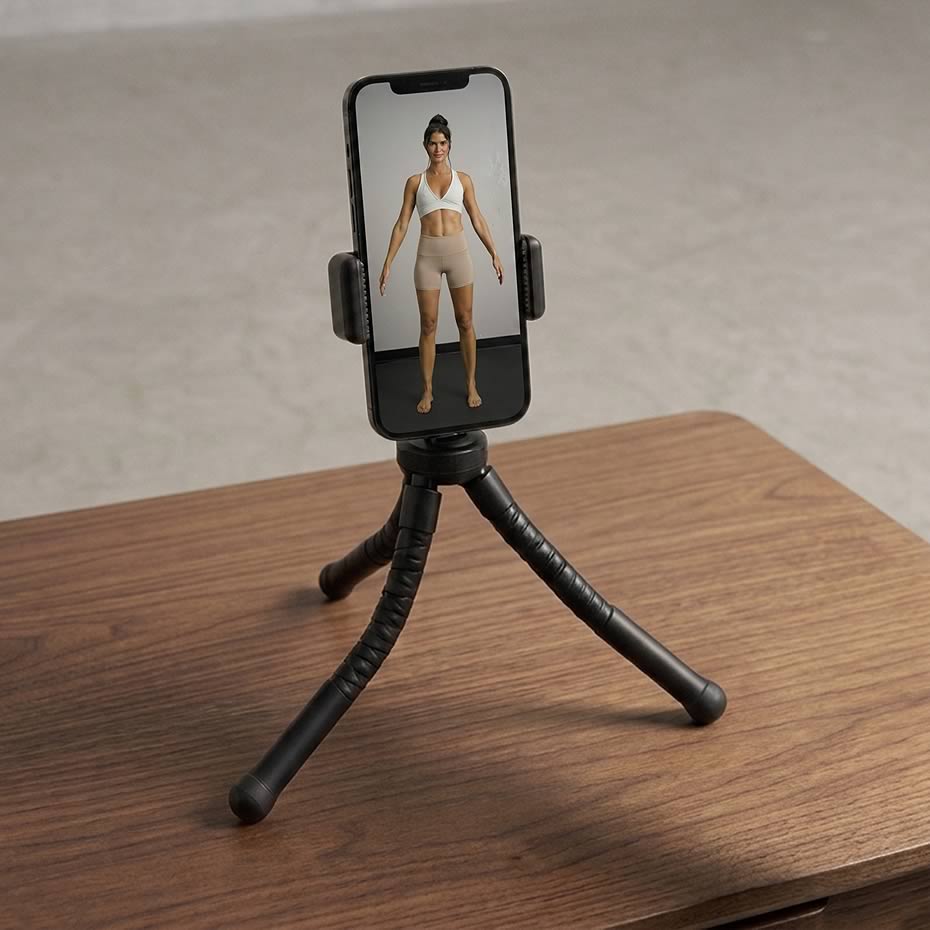
Stand in front of your phone. PHY takes four standardized captures and reconstructs them into one 3D body, proportionally scaled to your real height and oriented inside a fixed anatomical reference frame. The photographs are inputs to that reconstruction. The measurements are taken from the reconstructed body. 60 seconds. No hardware. No wearables. No clinic visits.
-
2. Learn
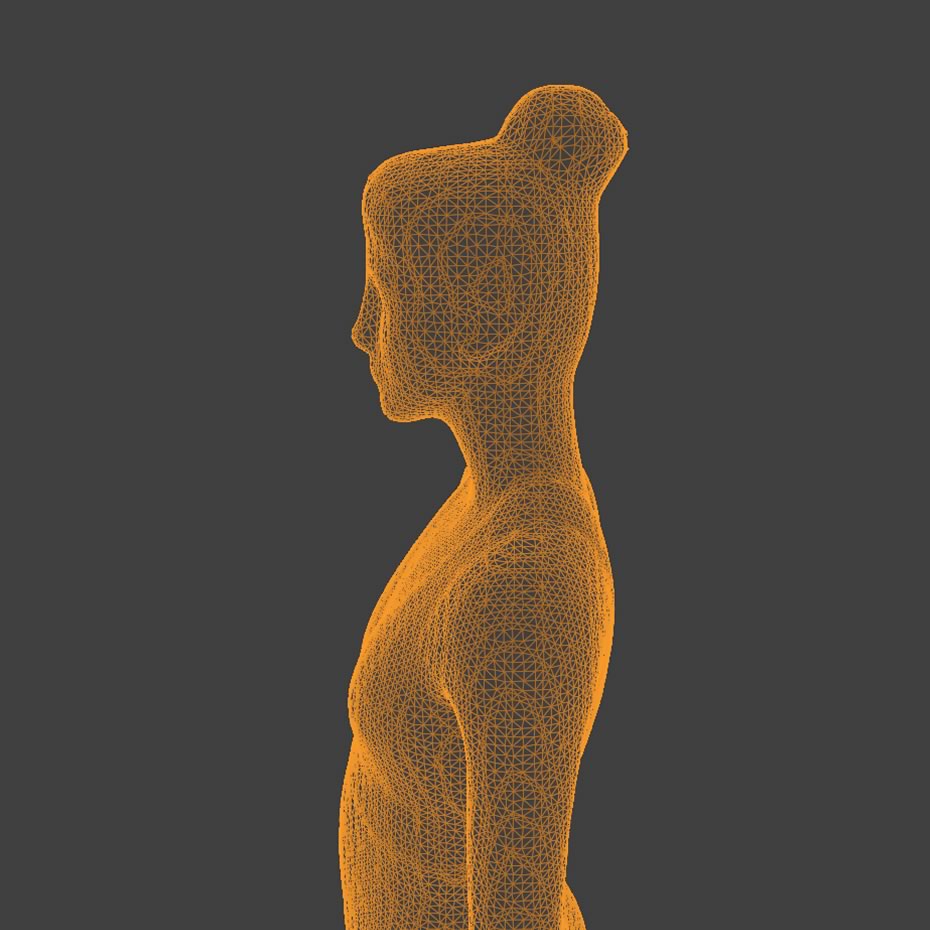
PHY calculates 32 clinically designed measurements across the sagittal, frontal and transverse planes, then reads them alongside your intake, your pain areas and your goals. Two products can both report “Shoulder Elevation” and mean different things. One estimates the position of two visible points on a photograph. PHY calculates it from anatomically defined landmarks on a reconstructed, scaled, spatially oriented model. Same name, different number, every time.
-

3. Train
A personalized plan built around your body, your goals and your movement demands, generated by the PHY Training Method and rebuilt every time you rescan or report a change in pain.
-
1. Scan
Stand in front of your phone. PHY takes four standardized captures and reconstructs them into one 3D body, proportionally scaled to your real height and oriented inside a fixed anatomical reference frame. The photographs are inputs to that reconstruction. The measurements are taken from the reconstructed body. 60 seconds. No hardware. No wearables. No clinic visits.
-
2. Learn
PHY calculates 32 clinically designed measurements across the sagittal, frontal and transverse planes, then reads them alongside your intake, your pain areas and your goals. Two products can both report “Shoulder Elevation” and mean different things. One estimates the position of two visible points on a photograph. PHY calculates it from anatomically defined landmarks on a reconstructed, scaled, spatially oriented model. Same name, different number, every time.
-
3. Train
A personalized plan built around your body, your goals and your movement demands, generated by the PHY Training Method and rebuilt every time you rescan or report a change in pain.
Total-body posture
intelligence.
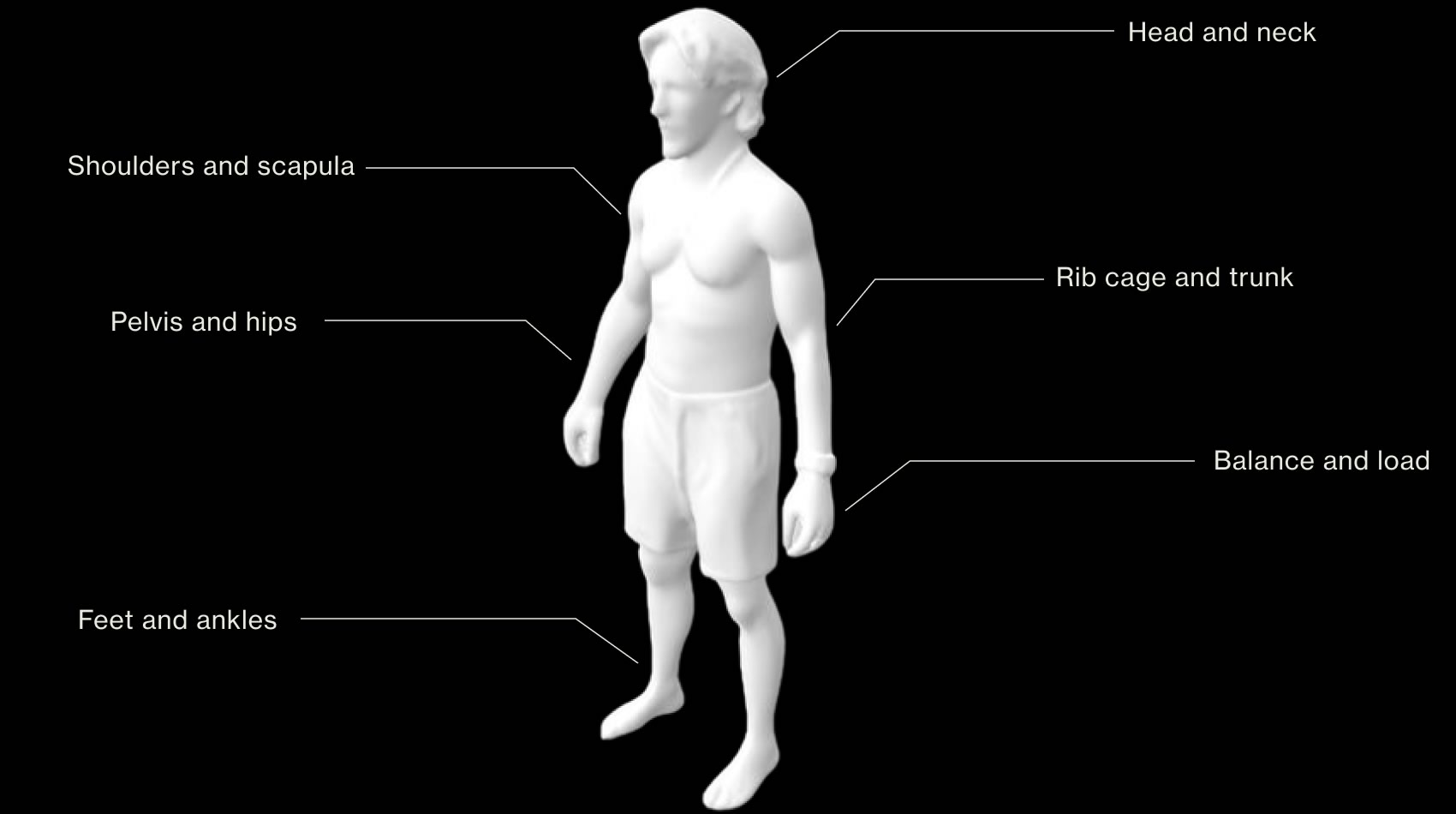
PHY reads the body as one connected system. Your 32 measurements are organized two ways at once: anatomically, into 10 Body Zones, so you can see where findings sit. And clinically, into Assessment Screens, so related measurements are read together the way a clinician reads them.
Two numbers, two timeframes.
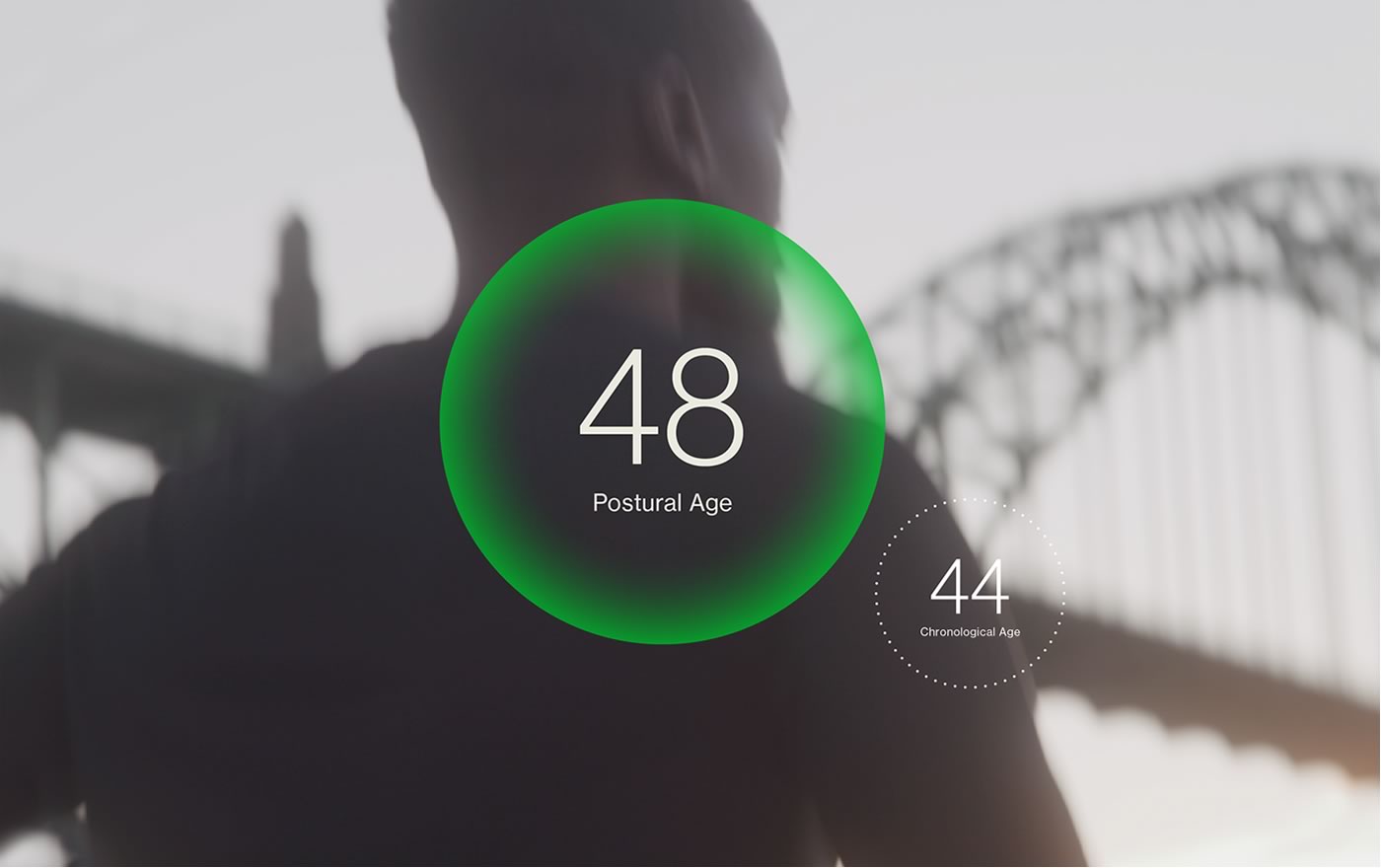
PHY Score. Your posture today, resolved into a single objective number, and compared against your own baseline.
Postural Age. How that number is tracking over time, translated into the one unit everybody already understands.
It’s not a verdict. It’s a baseline.
A reason to act.
A way to measure progress.

From scan to plan.
Every scan updates both numbers and rebuilds the training plan behind them. One system, always current.
Move better.
Age slower.
Your scan becomes your plan. One body. Two pathways.
150+ exercises. 15,800 routines. 225,000 variations. No two plans look the same.
Every PHY plan comes from the PHY Training Method, the clinical framework developed under the guidance of Dr. Kevin Wilk and Dr. Peter Moley and refined across more than 25 years of physical therapy, rehabilitation and movement science. It treats the body as one connected kinetic chain, so a plan is never built from a single measurement in isolation. Every exercise is bodyweight, controlled tempo or a static hold, chosen because movement quality is what teaches a body to organize itself. That is also what makes it work at any age, at any fitness level, almost anywhere.
Daily Training Plan
Relieve what hurts. Prevent what’s next.
A daily plan built from your scan and rebuilt every time you rescan or report a change in pain.

Activity Readiness
Warm up smarter. Cool down stronger.
A personalized 5 to 20 minute session tuned to your body and your activity, from running and golf to tennis and swimming.

Progress Over Time
Change your posture. Change your life.
Rescan and watch your body adapt.

Meet Robin. Your Physical
Intelligence coach.
Robin reads your body through the scan and your PHY Score. Robin learns from every answer you give it. Robin acts through plans and guidance in which every recommendation traces to clinical practice. Robin gets smarter with use, because every scan, check-in and question sharpens what the system knows about one specific body: yours.
Most AI health products will always produce an answer, whether or not the system knows one. When a question falls outside what has been clinically documented, Robin says so.
Ask Robin25 years of clinical practice. Always on.
The technology behind PHY:
Traditional assessment captures a moment. PHY builds a record.
-
Mobile 3D scanning, from any phone.
Four standardized captures become one anatomically consistent 3D body. A proprietary orientation methodology establishes the body’s true anatomical direction before a single measurement is calculated, which is what makes rotation measurable and repeat scans comparable.
-
Clinician-defined landmarks.
93 anatomical landmarks spanning the full kinetic chain, head and cervical spine to feet, including the AC joints, multiple scapular landmarks, ASIS and PSIS, greater trochanters, tibial tuberosities, medial and lateral malleoli and multiple vertebral levels.
-
Measurements beyond joint angles.
Most posture systems measure visible joint angles. PHY’s scaled, oriented model also measures linear distance, relative depth, spinal contour, proportional position, whole-body stacking, and rotation at multiple anatomical levels.